
Bringing Competitive Socialising to Every Venue: A Smarter, Lower-Cost Approach with BeeBox
The UK hospitality sector is evolving. The traditional night out—once centred purely around a few drinks and a catch-up with friends—is changing. In its place, a more interactive, experience-led model is gaining momentum: competitive socialising.
While the term itself may feel new, the concept certainly isn’t. Pubs and social spaces have long thrived on shared activities—dominoes, darts, bar skittles, cards, even pinball. What’s different today is how these experiences are being packaged, modernised, and expected as part of a night out.
The data backs this up. Around 30% of UK adults have visited a competitive socialising venue, and over a quarter of consumers say they’re doing so more often year-on-year (KAM Insights, 2024). At the same time, people are going out less frequently—but when they do, expectations are higher. Value for money and overall experience now play a central role in decision-making, with cost often cited as a key barrier.
The message is clear: people still want to go out—but it has to feel worth it.
The Challenge for Traditional Venues
For the typical town centre pub, this presents a dilemma. How do you introduce engaging, competitive experiences while managing rising costs, tighter margins, and operational pressures?
It’s worth being realistic here. If the fundamentals aren’t right—good beer, strong service, a welcoming atmosphere at a fair price—no amount of added entertainment will fix that. You can’t turn a struggling venue around simply by bolting on new features.
But for well-run pubs with a solid foundation, the opportunity is real. And crucially, it doesn’t have to mean expensive installations or long-term commitments to the latest trend. Competitive socialising isn’t limited to high-cost, high-tech setups like electronic darts systems or premium gaming concepts.
A More Practical Approach
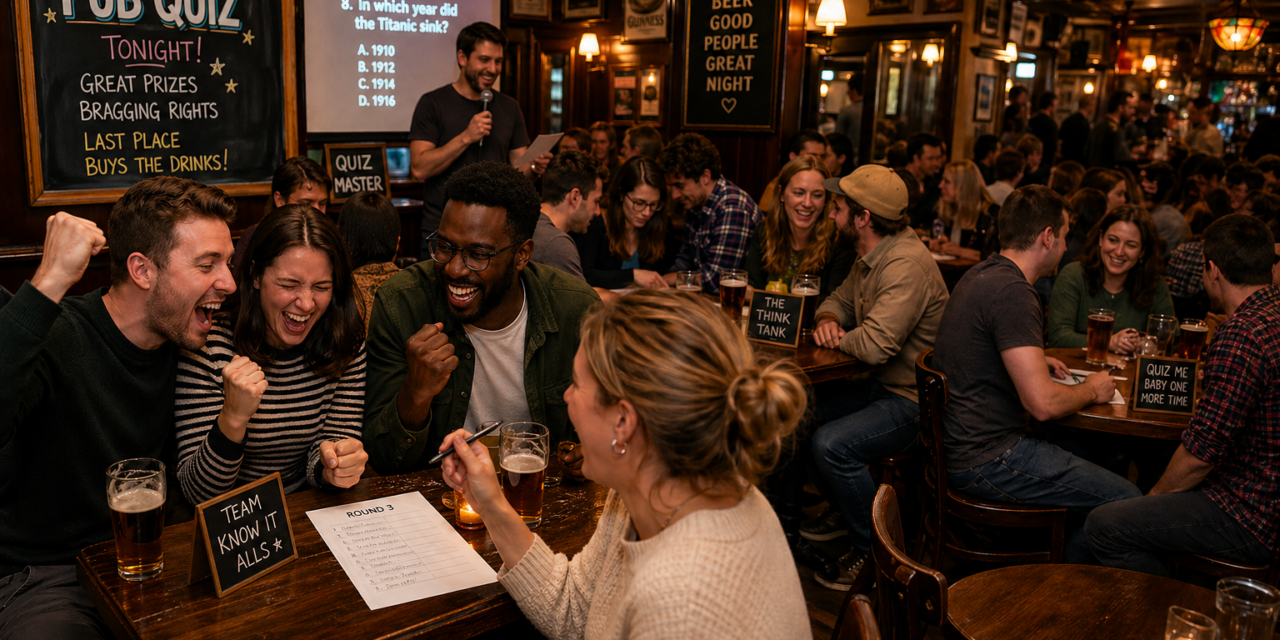
What the market is increasingly showing is that smaller, more flexible formats can be just as effective. Pub quizzes, music-led interaction, and light-touch social games continue to draw crowds because they’re accessible, familiar, and easy to engage with.
The real question isn’t whether to adopt competitive socialising—it’s how to do it in a way that makes commercial sense.
Where BeeBox Fits In
This is where BeeBox offers a different approach.
Rather than requiring structural changes or significant capital investment, BeeBox enables venues to introduce interactive, competitive experiences using the space and infrastructure they already have. It brings together quiz formats, music engagement, and social gaming in a way that is easy to run, repeatable, and consistent.
Importantly, it removes many of the common barriers. There’s no need for complex setup, additional staffing, or operational disruption. Instead, venues can deliver engaging experiences that encourage customers to stay longer, return more often, and spend more while they’re there.
At its core, BeeBox addresses one of the biggest tensions in hospitality today: balancing cost with return.
Why This Matters Now
The demand for competitive socialising is already there. The challenge isn’t convincing customers—it’s making the numbers work.
Consumers are actively looking for more than just drinks. They want shared experiences, interaction, and entertainment that feels good value. Meanwhile, operators are dealing with rising costs, reduced footfall, and ongoing margin pressure.
BeeBox sits between those two forces. It gives venues a way to stay relevant in an experience-driven market, compete with higher-investment operators, and offer something distinctive—without taking on significant financial risk.
A Smarter Way to Compete
The future of hospitality isn’t about turning every pub into a large-scale entertainment venue. It’s about understanding what customers actually value: connection, engagement, and a reason to stay longer.
That can be delivered without overcomplicating things.
BeeBox doesn’t replace the traditional pub model—it enhances it. It builds on what already works and adds a layer of interaction that keeps customers coming back.
Conclusion
Competitive socialising is reshaping expectations across the sector, but it doesn’t have to come with high costs or complexity.
For most operators, the real opportunity lies in starting small, delivering consistent and engaging experiences, and building loyalty over time.
Because in today’s market, success isn’t defined by who spends the most—it’s defined by who creates the best experience at the right cost.